
Recover your commercial roof with GAF
Instead of replacing your structurally-sound low-slope roof, consider one of these cost-effective recover strategies.
When should you consider a recover instead of a reroof?
Sometimes a full reroof simply isn’t necessary. Recovering a structurally-sound existing roof with new materials — such as single-ply membrane or a coating — may offer a better alternative that delays sending waste to a landfill and may add years to your roof’s life. All at a fraction of the time and expense of a full roof tear-off and rebuild. Consider a recover when:

There is only one roof present
If the roof has already been recovered once, certain codes will require that you completely reroof or evaluate whether the roof is a candidate for a coating.

The roof is structurally sound
The roof has no significant moisture or deterioration issues. Core cuts are recommended to evaluate the condition of insulation and other structural layers.

You’re adding solar reflectivity
Adding a TPO or PVC surface to a previously dark (e.g. asphalt or EPDM) roof can help lower rooftop temperatures.

You don’t need an upgrade
A reroof often requires potentially expensive upgrades increasing the insulation requirements driven by energy codes.
Roof recover solutions
Your choice of roof recover will depend on factors including 1) the weather conditions your building regularly faces, 2) how the building is used, and 3) what material it’s currently roofed with.
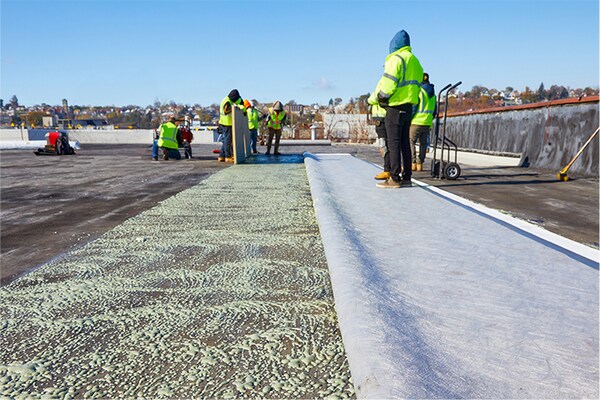
Fleece-back membrane recover
Fleece-back TPO or PVC membrane can be applied over a wide variety of substrates, including polyiso, asphaltic, concrete, TPO, PVC. The fleece backing will provide a separation that may increase puncture resistance compared to standard membrane of the same type. The fleece back eliminates the need for slip sheet or recover board when going over an existing asphalt roof.
Featured re-roof videos

Assessing the Roof for a Re-Cover
Determining the right options for an aging roof requires that you properly assess the existing assembly and condition.

Mod-Bit Recover Project Overview
Dave and Wally from GAF's "Roofing it Right" provide an overview on how to evaluate a roof, and demonstrate four different recover options.
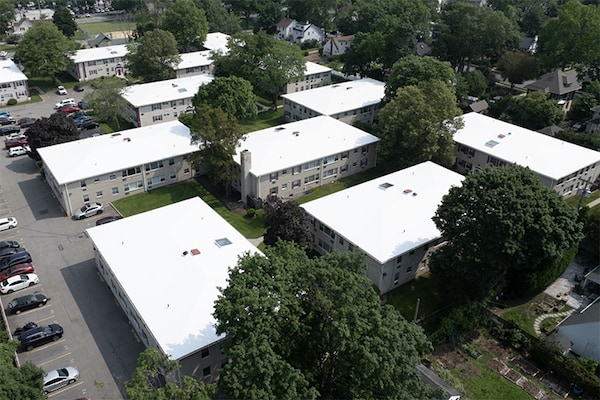
Project Profile: Post House
The unique structure and condition of the 12-unit Post House HOA mod-bit roofing system offered the perfect opportunity to postpone costly and disruptive tear-offs, A recover system featuring GAF EnergyGuard™ HD (High-Density) Polyiso Cover Board mechanically fastened over the decking, topped with GAF EverGuard® TPO 60 mil Membrane adhered using GAF Quick Spray LV-50 adhesive restored beauty and durability, while adding TPO reflectivity.
Frequently asked questions
Depending on the condition of the existing roof, you can postpone the need for a roof tear-off — potentially reducing current labor needs, reducing jobsite waste, and causing minimal disruption to building occupants — by recovering the existing roof with EverGuard® single-ply membrane. Recovering systems may qualify for a guarantee up to 20yrs.*
* For qualified systems only. Additional requirements apply. Contact GAF for more information.
GAF recommends using EverGuard® Fleece-back TPO or PVC membrane along with GAF approved LRFs. Mechanically attached systems are also an option when recovering with fleeceback membranes.
Contact Design Services for assistance with questions and resources for commercial roof recovers.
A reroof entails removing the entire existing roof, down to the decking, and replacing each layer with new materials. A recover typically retains much of the existing roof, such as insulation, cover boards, and often the top membrane (asphaltic, single-ply, EPDM, etc.). The existing roof components are then covered with a new top membrane, typically single-ply PVC or TPO or an appropriate coatings system. The difference between the two processes often comes down to material and labor costs.
As with any roof construction project, the cost of a roof recover will be primarily driven by time, labor and materials. Since a roof recover usually takes less time and labor, and uses less new material, than a full reroof, costs should reflect that difference.
While many factors can affect the longevity of a recovered roof, qualified GAF recover systems are eligible for guarantees up to 20 years.*
* For qualified systems only. Additional requirements apply. Contact GAF for more information.