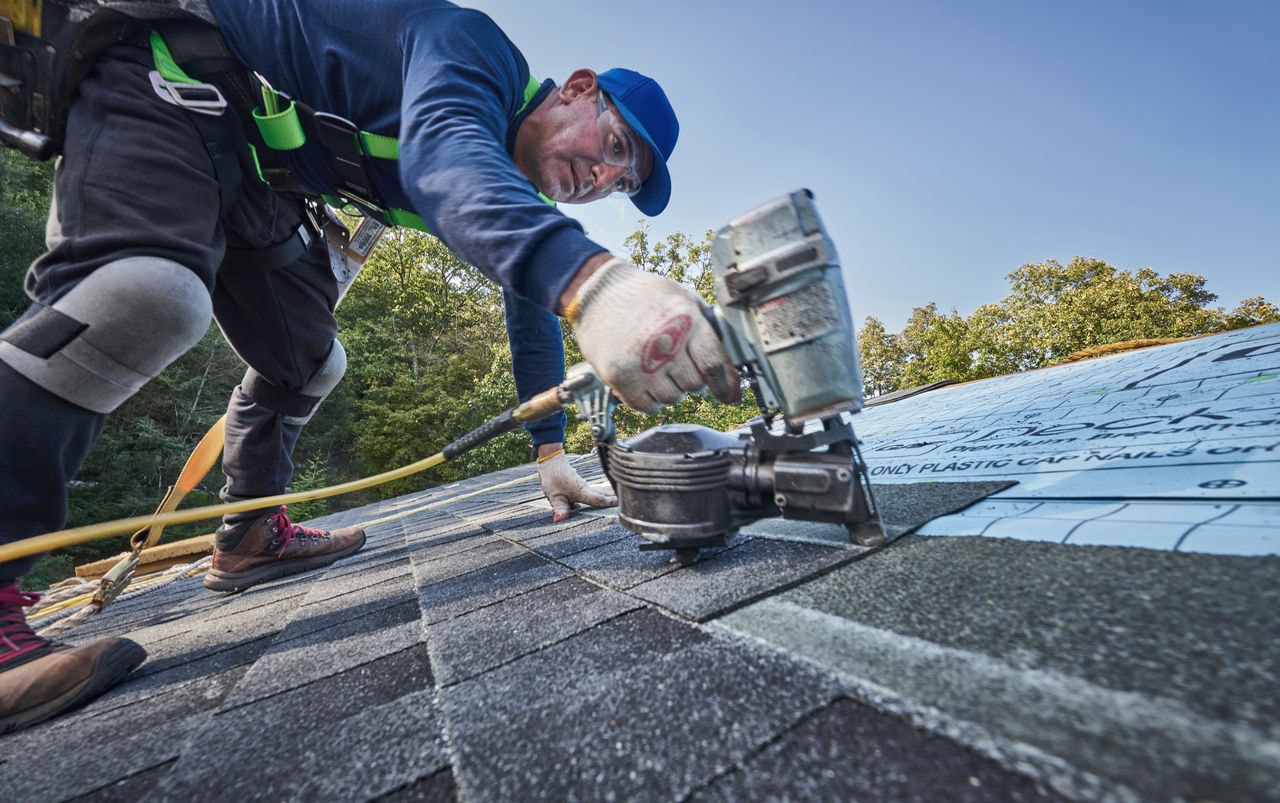
If you're managing an aging roof or dealing with sudden leaks, you may be wondering whether to repair or replace your roof. GAF has recommendations and advice to help make the decision for roof repairs versus replacement, easy.
The most critical factors in this decision include your roof's age, the extent of the damage, its repair history, and the comparative cost of a fix versus a fresh start. Use this guide to determine the best path forward for your home.
How Old is Your Roof?
When choosing between replacing or repairing, consider age. Is your roof under 15 years old, or over 15? If over, and showing signs of damage, like missing tiles or moisture growth, replacing your roof may be the better financial choice. If your roof is under 15 years with smaller signs of damage, repairing it can be a smart choice as it still has life left. However, age isn't the only factor in making the call, but it is one of a few factors to consider.
Signs of Roof Damage
Before you make any decisions, evaluate your roof for issues.
Missing tiles or shingles that curl due to weather damage are easy to replace
Signs of water stains after a storm on your walls or ceilings can indicate small leaks, which are less expensive to repair
Mold growth can be treated in patches if it’s small, but if you’ve got extensive mold, a replacement is your best bet
Signs of a sagging roof can indicate a structural issue and would likely require being replaced over repairing
Noticeable granule loss — shingles can wear down over time and as they do, they can appear bald, making your roof more vulnerable and indicating your roof is aging
If your roof is showing signs of damage, it's important to act before things get worse. Smaller repairs done correctly now can mean a longer roof's lifespan.
Residential Roof Repair Inspection Checklist
Getting your roof inspected by a GAF-certified contractor is a smart idea before deciding whether you need to replace your roof or not. Doing an inspection on your own is risky, and requires you to take safety precautions, so consider using a professional.
Review this checklist with your roofing company to assess your roof’s condition:
Inspect gutters for damage or clogs
Check exterior walls for signs of water damage
Check that flashings and drip edges are secure
Look for cracked or curling shingles
Inspect for moss and mold
Inspect metal flashings around chimneys or skylights for any damage or leaks
If you have an attic, check for signs of any mold or mildew and for proper ventilation.
Two Rules for Comparing Costs
Use The Roof "Repair vs. Replace" Economic Calculator
If roof repairs will cost more than 25 % of the cost of a new roof, it's better to replace. Otherwise, you run the risk of making the repairs and then before you know it, paying to have it replaced.
Consider The 30 % Rule
If your roof is 30 % or more damaged? Time to replace. That's a large surface area of the roof that would likely serve you better if it were a brand-new roof. If it's less than 30 %, a repair is a reasonable option as long as your roof is 15 years old or younger and has not had extensive repairs in the past or is not suffering with major roof issues like mold or structural issues.
How Long Should a Roof Last?
Lifespan varies significantly by material. Here's what you can typically expect:
Asphalt lasts 20-30 for three-tab, or 30-50 for architectural
Clay or concrete, used in hot environments, can last 50-100 years
Flat roofs can last 15-30 years
Metal roofs average 40-70 years
Slate tile roofs are durable—60-150 years, but are very expensive
Wood shingles last 30 with good care
Choosing the Right Professional
Choosing a contractor is just as critical as choosing your shingles. When you work with a GAF-certified contractor, you’re partnering with a professional who is vetted, insured, and trained in the latest installation techniques. Beyond just avoiding the risks of DIY repairs, a certified expert ensures your roof is installed as a complete, integrated system — protecting your warranty and your home’s long-term resale value.
Keep in mind these few things when hiring a roofer:
Licensing: Do they have the proper credentials and licensing from roofing manufacturers?
Experience: Has your roofer worked on other roofs will similar issues? Do they come highly recommended?
Insurance: Are they properly insured in case of accidents?
How long will your repairs or a replacement take?
Roof repairs take a few hours to 3 days and a roof replacement can take 2 to 5 days.
Repair vs. Replace: Quick Reference
Age/years | Condition/Size of issue | Past repairs | Costs | Result |
Under 15 | Good with minor issues like curling shingles/ Less than 30 % size of the roof | None or 1 small repair | 25 % less than a new roof | REPAIR |
Under 15 | Moderate or severe like mold and structural problems/ More than 30 % size of the roof | None to a few repairs | 25 % the cost of a new roof | REPLACE |
Over 15 | Good with minor issues like curling shingles/ Less than 30 % size of the roof | None or 1 small repair | 25 % less than a new roof | REPAIR |
Over 15 | Moderate or severe like mold and structural problems/ More than 30 % size of the roof | None to a few repairs | 25 % the cost of a new roof | REPLACE |
Sometimes, a fresh start is the most responsible choice. Even if a roof appears to be in fair condition, if the cost to fix localized issues surpasses 25 % of the cost of a full replacement, you've likely reached the point of diminishing returns. Rather than spending 1 100 $ or more on recurring patches, a full replacement ensures your entire home is protected by a unified, warrantied system, saving you from the 'repair-and-repeat' cycle.
Whether you’re patching a minor leak to extend your roof's lifespan or investing in a full GAF roofing system, the most important step is quality execution. Don't leave your home's protection to chance. Connect with a GAF-certified contractor* near you to get a professional assessment and ensure your roof is ready to weather whatever comes next.
*Contractors enrolled in GAF certification programs are not employees or agents of GAF, and GAF does not control or otherwise supervise these independent businesses. Contractors may receive benefits, such as loyalty rewards points and discounts on marketing tools from GAF for participating in the program and offering GAF enhanced warranties, which require the use of a minimum amount of GAF products. Your dealings with a Contractor, and any services they provide to you, are subject to the GAF Contractor Terms of Use.
