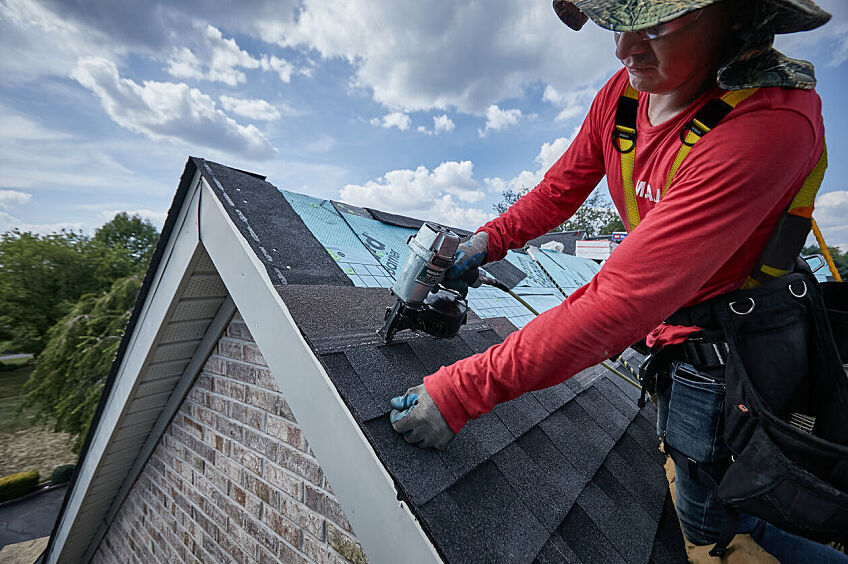
If you live in a cool climate that's prone to severe weather, such as high winds and hail, standard asphalt shingles may not perform as well as you'd like. Asphalt becomes brittle and stiff when temperatures drop, leaving your roof vulnerable to hail and wind damage.
GAF Timberline® ArmorShield II (AS II) shingles feature a rubberized polymer modified asphalt that enhances the shingle's flexibility, even in cool temperatures. This helps improve the durability and impact resistance of your roof, increasing protection and potentially saving you money on costly repairs.
To learn more about the advantages of Timberline® AS II shingles, let's explore the effects of cool weather on shingles and the testing methods used to quantify their performance.
The Importance of Climate and Cool Weather Challenges
When cool weather comes, it can affect the performance of standard asphalt shingles, both during installation and after.
Cool temperatures can make standard asphalt more brittle and stiff. During installation, this can increase the risk of cracking during handling, stacking, and nailing. This can generate material waste and increase the time required to install the roof.
To improve durability, reduce the risk of cracking in cooler weather, and provide additional protection in areas prone to severe weather, a rubber-like SBS Modified asphalt can be used, as in GAF Timberline® ArmorShield II shingles.
Timberline® ArmorShield II Shingles: The SBS Advantage
The GAF Timberline® ArmorShield II shingle is a high-performance, architectural shingle that addresses the challenges of cool weather and severe storms through its material composition. The asphalt coating on the shingle is mixed with a synthetic rubber polymer (styrene-butadiene-styrene, or SBS), which gives the asphalt a "rubber-like" flexibility and elasticity.
The addition of SBS improves the performance of the Timberline® AS II shingle:
Enhanced Flexibility: Their rubber-like property means Timberline® AS II shingles are less prone to cracking when being handled and bent during cool-weather installation when compared to non-modified shingles. They're an easier-to-handle and more dependable option for contractors in varying climates.
Impact Resistance: The addition of SBS provides superior impact resistance, making it ideal for hail-prone areas as it passes the UL 2218 Class 4 impact resistance test, the highest rating possible.
At GAF, we've put the durability and impact resistance of our Timberline® AS II shingles to the test, and they've passed with flying colors. And due to their high ratings, they can be used to comply with certain FORTIFIED Roof™ requirements.
ASTM Testing Standards and Performance
The performance ability of the Timberline® ArmorShield II shingle has been proven through rigorous third-party testing standards.
Impact Resistance
The Underwriters Laboratories (UL) 2218 Class 4 Impact Resistance rating is the highest available for roofing. To pass, a shingle must withstand the impact of a 2-inch steel ball dropped from 20 feet twice on the same target area without cracking or rupturing through the shingle. On a standard asphalt shingle, ruptures or cracks will appear immediately after impact, indicating failure. However, a Class 4 impact-resistant shingle shows no evidence of ruptures or cracks through the shingle after impact.
The UL test is the standard most insurance companies use, and installing Class 4 impact-resistant shingles, like Timberline® AS II, may qualify homeowners for a discount on their insurance premiums in hail-prone areas.
Wind Resistance
In addition to the UL impact resistance rating, Timberline® AS II shingles have been tested for wind resistance under the ASTM D3161 and ASTM D7158 standards.
ASTM D3161 is a test method used to measure the wind resistance of steep-slope roofing products. It works by subjecting the shingles installed on a roof-like panel to a controlled, constant wind speed for two hours. A shingle passes if the sealant holds and the shingles doesn't lift up all the way. The test determines the shingle's wind-resistance classification, with higher classes indicating greater resistance to wind uplift. Timberline® AS II has an ASTM D3161 Class F 110mph wind-resistance classification, the highest available.
ASTM D7158 compares wind uplift force to a shingle's mechanical uplift resistance. The test involves sealing the shingles under defined conditions and then measuring the force required to lift them. Shingles are classified into ratings based on the wind speed they can withstand, such as Class D for 90 mph, Class G for 120 mph, and Class H for 150 mph. Timberline® AS II has an ASTM D7158 Class H 150mph wind-resistance classification, the highest available.
When Timberline® AS II shingles are installed with the required combination of GAF accessories and leverage our LayerLock® technology, they qualify for our WindProven™ Limited Wind Warranty with no maximum wind speed limitation. This is a significant performance advantage over standard Class F- or Class H-rated shingles.
Timberline® AS II has also been proven to provide excellent granule adhesion per ASTM D4977 testing standards, which can help keep your roof looking great for years to come. They also lay flatter in cooler temperatures than standard asphalt shingles, providing additional protection against moisture intrusion.
The Best Protection for Severe Weather
We've engineered Timberline® AS II Shingles to provide extra protection for your roof in hail-prone areas, resist wind and blue-green algae, and look amazing at the same time. They meet UL's toughest impact resistance standard and provide excellent flexibility, enhancing resistance to cracking and allowing them to lay flatter in cooler temperatures than standard asphalt shingles
GAF Timberline® AS II shingles are an easy-to-handle and dependable option for use in varying climates. Reach out to a local GAF contractor to see if they're right for your location.
