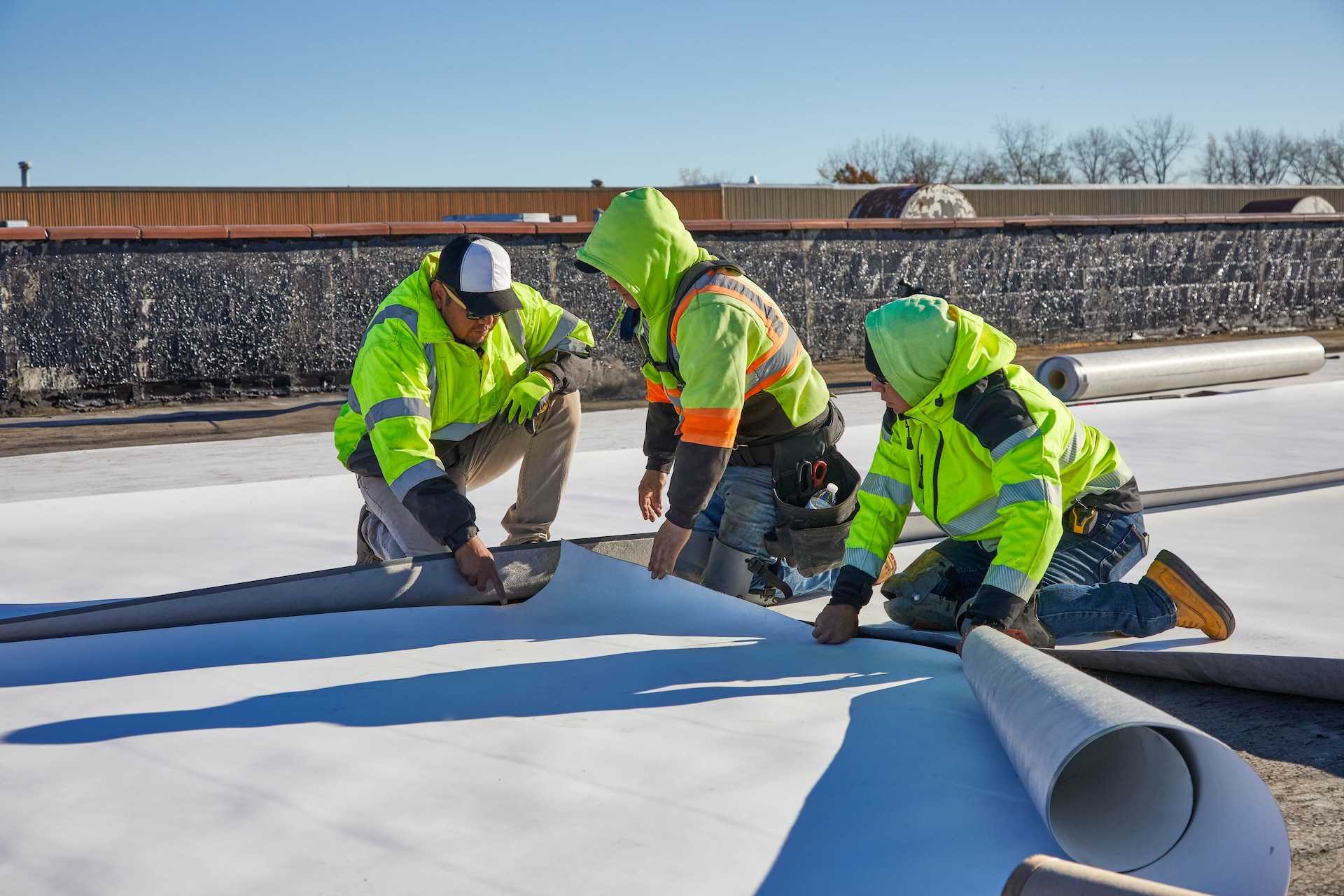
Cooler weather doesn’t mean that single-ply roofing installations must come to an end. If you’re installing single-ply roof membrane from GAF including Everguard® TPO or PVC, the work can continue at ambient temperatures below 40°F (4,4°C), as long as you follow the manufacturer’s instructions and precautions.
With careful planning and attention to detail, single-ply roofing systems can be installed in cooler temperatures without experiencing adhesion failures, wrinkling of the membrane, poor welds, and blisters.
Following are some tips for success and answers to your frequently asked questions about cool weather installation of single-ply roofing membranes.
Material Storage Matters
Colder conditions will require special storage conditions for materials - especially your adhesives, sealants, and primers. Leave the membrane inside until you're ready to install so it remains flexible. Use heat boxes or heat blankets to ensure they are at the manufacturer's recommended temperature for use.
Be aware that the "working window" for solvent-based adhesives will be shorter in cooler temperatures. This is the window of time between flash off and when the adhesive no longer has any tack.
Crews Need Special Consideration Too
Be sure that your crew is informed of the best practices for working in cooler weather and have access to areas where they can warm up, such as heated vehicles or areas of the job site with portable heaters.
According to OSHA, crews working for prolonged periods in cooler temperatures are subject to hypothermia and frostbite. Workers should be aware of warning signs of these conditions and be prepared to take action when experiencing any of the symptoms.
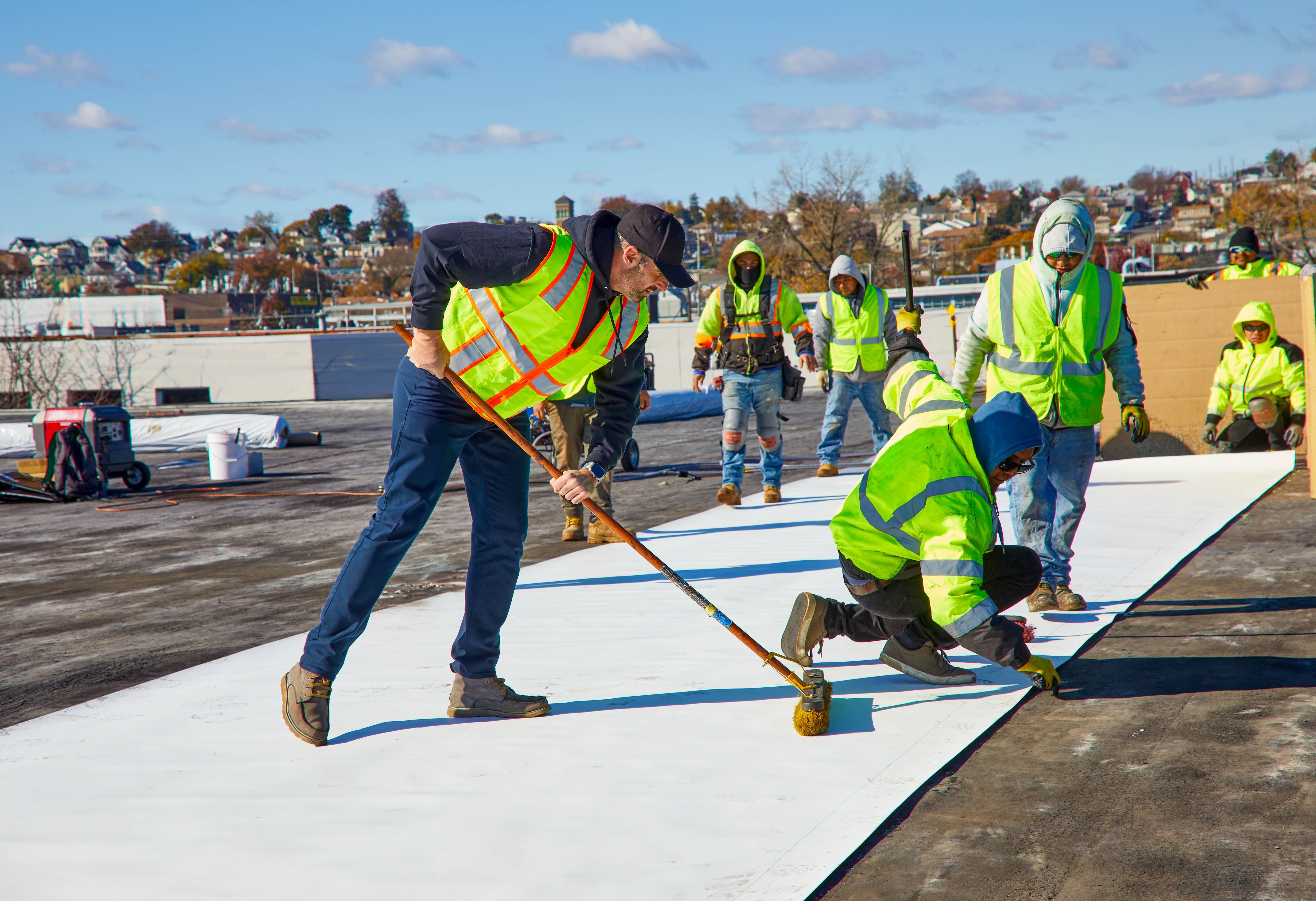
Cold-weather Installation FAQ's
What is the minimum temperature for installing TPO or PVC roofing?
Installations are considered standard when ambient temperatures are above 40°F (4,4°C). When temperatures drop below 40°F, contractors can still install single-ply roofing membrane as long as they are storing materials in heated locations, adjusting their welder speeds to accommodate the cooler environment, ensuring their adhesives are warm, and performing frequent test welds throughout the day.
Why do seam welders need slower speed settings in cold weather?
When the outside air is cold and the temperature of the membrane is cooler, the welding tip's heat will be pulled away faster than it would be in warmer weather. By reducing the speed of the welder, the heat exposure time is increased which ensures that the membrane sheets will achieve proper fusion. "Simply increasing the temperature setting alone can cause issues, making speed adjustments and test welds are critical to finding the ideal settings for your welder," advises Michael Cukrow, Product Manager for GAF.
How often should contractors conduct test welds during cold weather installation?
Be sure to perform your first test weld in the morning before starting work. Because temperatures and conditions fluctuate throughout the day, it's important to do this throughout the day. If the crew takes a long break or stops work for lunch, a test weld should be done before resuming. If wind speed changes or the sun goes in or out, it's imperative to do another test weld to ensure you have the ideal settings.
How does cold weather affect roofing adhesives and primers?
Colder ambient temperatures mean that the flash off or drying times for liquid adhesives and primers will be slower that during standard installations. When using solvent-based adhesives, the cooler temperatures mean that they will have a shorter "working time" window as mentioned earlier. You'll need to take that into consideration when planning the installation because once it loses tack it will become useless.
Do membrane wrinkles affect a single-ply roof warranty in cold weather?
During cold-weather installations when using fasteners, you may experience small wrinkles in the membrane. These small wrinkles typically do not affect the structural integrity of the system or the warranty as long as they are under one-inch high when pressed together. All seam welds must also pass inspection. It's recommended to perform test welds throughout the day to ensure the settings on your RhinoBond® induction tool are correct.
Is Cool Weather Installation Right for Your Single-ply Roofing Project?
If you’re wondering whether a project is a candidate for a cool-weather installation, GAF is ready to support you in determining the right installation methods.
GAF Design Services Can Assist You with these and other questions you may have. GAF Design Services can be contacted at 877-423-7663 or DesignServices@gaf.com. The GAF website is a great resource for just about any question you may have or for additional information you may require. Please visit www.gaf.com to find the latest information on our products and their installation.
