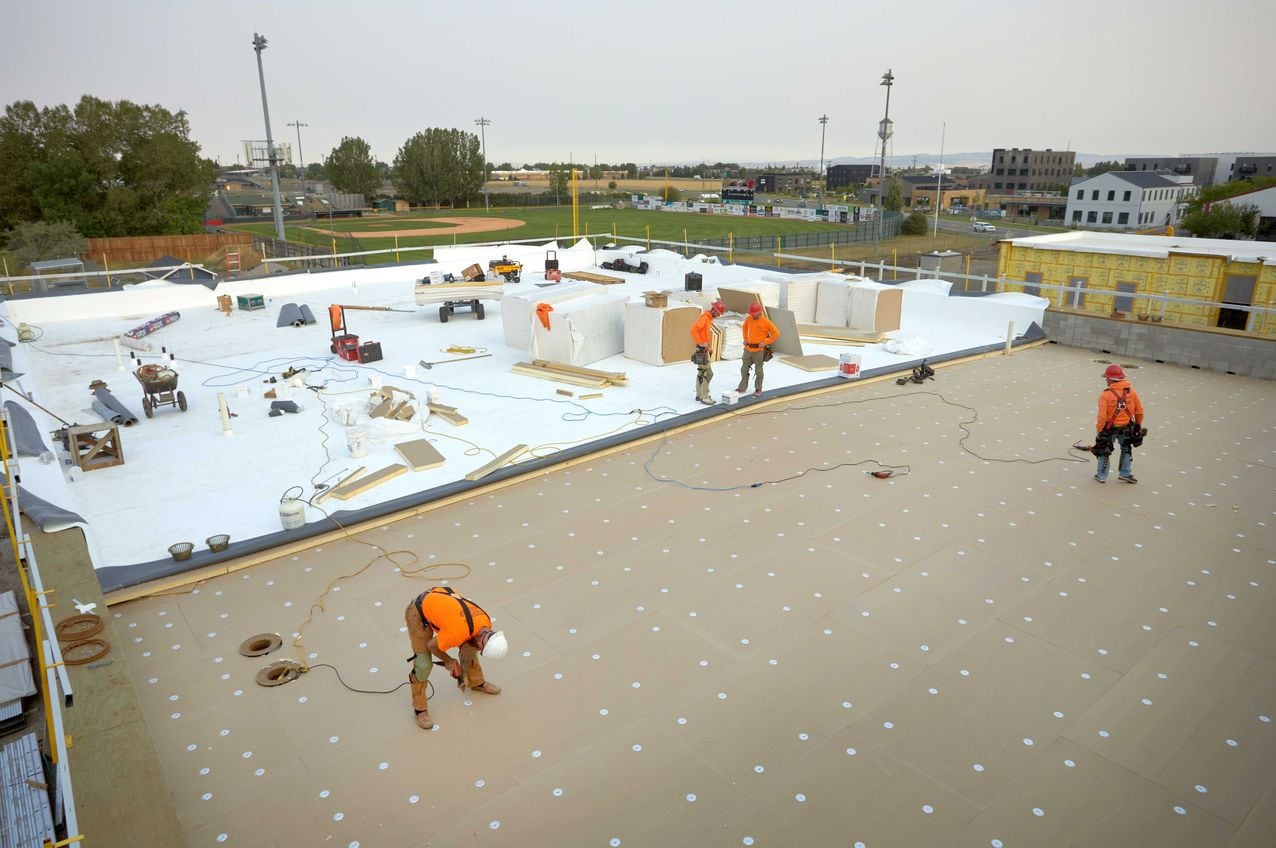
A built-up roofing system (BUR) is a popular choice for buildings with low-slope or flat roofs. Often referred to by the acronym BUR, this system has been used in the US for over 100 years.
BUR systems are known for providing excellent protection due to their redundant nature-they're made of multiple layers of ply sheets and asphalt. The plies give the building weather resistance and heavy-duty protection. These layers are then topped off with a cap sheet or a flood coat of asphalt and gravel.
Built-Up Roofing System Components
BUR systems can be constructed in various ways. Often, they start with a base sheet installed over the polyisocyanurate (polyiso) insulation or cover board, typically using mechanical fasteners. This base sheet serves as the bottom layer of protection for the roof system and provides a surface that allows subsequent sheets to adhere with hot asphalt.
A layer of asphalt is applied over the base sheet to install reinforcing felt, sometimes called a ply sheet. While contractors traditionally mop kettles of hot asphalt onto the base sheet to install the ply sheet, advances in manufacturing have created alternative options. For instance, contractors can also use torch-applied, cold-applied, or self-adhered methods instead.
When saturated in asphalt or cold-applied adhesive, the reinforcing felt creates a barrier that provides additional resistance to water intrusion. The process is repeated by applying asphalt and installing additional plies until the desired number of ply sheets is achieved. The system is then either capped with a mineral-surfaced cap sheet or covered with a flood coat of asphalt followed by immediately spreading gravel or slag which acts as an additional layer of protection against foot traffic or UV rays.
This video provides an easy-to-understand look at the layers of a typical multiply-ply system.
Benefits of Built-Up Roofing
BUR offers many benefits.
Time-Tested Technology
It's hard to argue with more than 100 years of history.
Redundancy
Built-up roofs provide many layers of protection. So if the top layer is damaged, the additional layers below continue to protect the building from water intrusion.
Guarantees/Warranties
BUR systems may be eligible for guarantees or warranties of up to 20 years, depending on the materials used and the system installed. Check with the manufacturer for guarantee/warranty requirements and coverage.
Reflective Cap Sheets Available
White-coated cap sheets are available to help reflect the sun's rays away from the building, which can help lower internal temperatures. These membranes are also listed on the Cool Roof Rating Council's website which can help identify solar reflective properties of your roof surfacing.
When to Use Built-Up Roofing
BUR works best on low-slope roofs, as the material's characteristics protect against standing water and heavy impacts. Additionally, a BUR membrane is ideal if a building's roof is expected to receive a lot of foot traffic from technicians or other employees. Its multilayered construction allows it to handle foot traffic without impacting the integrity of the designed system.
This system has also proven effective in areas that experience severe weather. BUR membranes are built to withstand extreme weather temperature swings. To provide protection in sunny areas, contractors should install a cap sheet that contains a mineral surfacing. Enhanced solar reflectance options, as outlined above, offer a white surface that reflects ultraviolet (UV) rays, boosting commercial buildings' energy efficiency.
BUR can also be used as a base sheet with layers of atactic polypropylene (APP) or styrene butadiene styrene (SBS) membranes. This diverse layering system can provide the additional benefits of modified bitumen like superior UV resistance and more flexibility when needed.
Built-Up Roofing Installation Costs
BUR systems can have higher initial costs than other commercial solutions. They require multiple layers (including a base sheet, multiple ply sheets, and a cap sheet), increasing costs. The installation methods can also be labor-intensive and take time to complete-four days or longer, depending on the method of installation and roof size.
However, BUR systems can be cost-effective in the long run, as they have low maintenance needs. With guarantees of up to 20 years, buildings get a long-lasting roof with exceptional protection and a lower risk of leaks, reducing the need for costly repairs. Additionally, combining a base system of BUR ply sheets with an APP or SBS cap membrane gives a roof the benefits of modified bitumen system while keeping costs down.
Choosing the Right Material for Your Next Job
You have many options for an asphaltic roofing system, each with different benefits. You can learn more about each system and its installation methods through the Asphaltic Commercial Roofing 101 playlist on the GAF YouTube channel. You can also compare GAF commercial roofing products' features and available guarantees.
Interested in talking through the options with a fellow roofing professional? Reach out to a Commercial Territory Manager in your area and tap into GAF design professional and architect resources.
