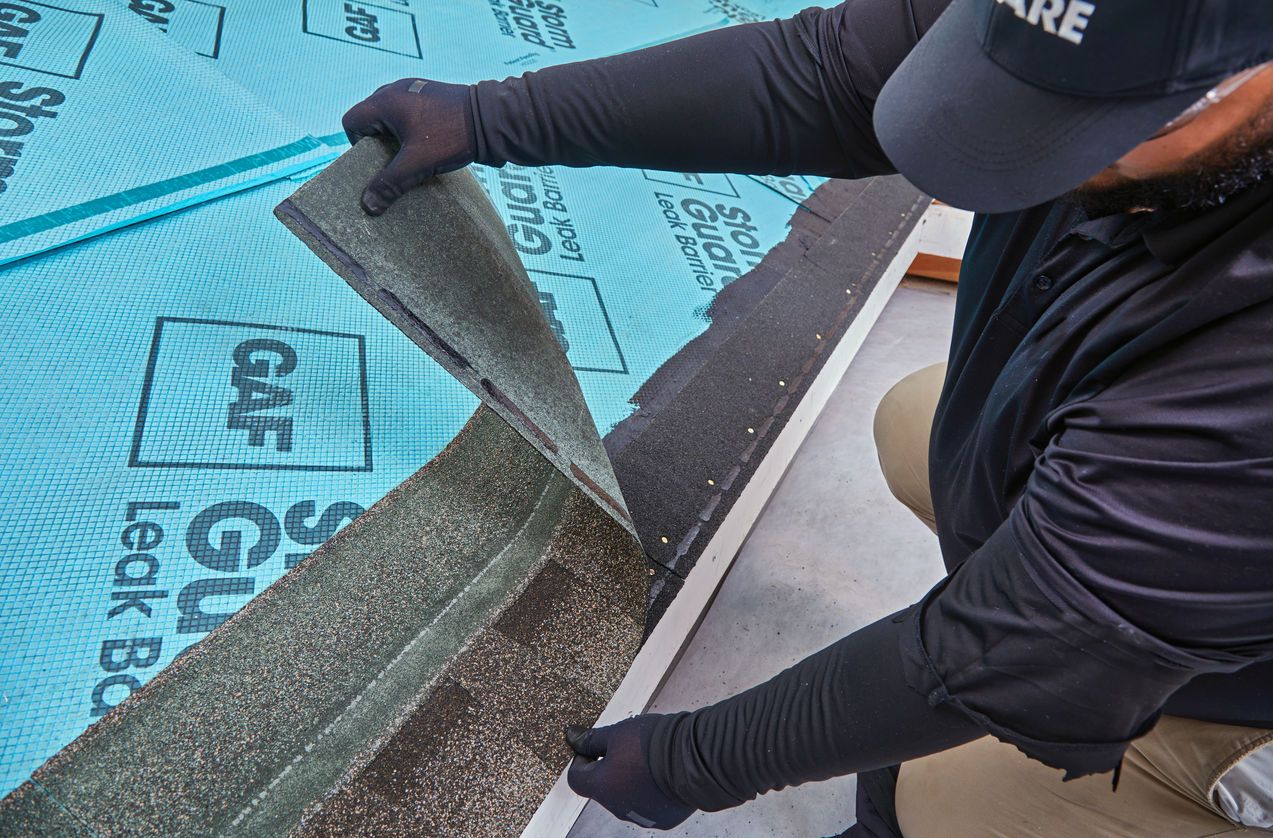
If you're a Florida homeowner, you're well aware of the challenges involved in securing – and keeping – property insurance for your home. Due to Florida's frequent and intense seasonal storms, insurance underwriters perceive a rising risk of catastrophic property damage, especially in the southern and coastal areas of the state. As a result, insurers are tightening standards, increasing premiums, or dropping coverage.
Whether you are building a new home or replacing the roof on your existing home, it can be helpful to know what insurance carriers are looking for, and what steps you can take to make sure your new roof is as hurricane-resilient as possible.
Navigating the Florida Insurance Squeeze
When it comes to storm damage in Florida, insurance carriers are putting more emphasis on roofs than ever before. The reason? Roof failure is responsible for most of the damage claims in the state, and, contrary to popular belief, the age of your roof is not the sole determining factor.
Of more importance than the age of your roof is the quality of your roof's construction, and whether it is engineered for your particular wind zone to withstand extreme weather conditions.
For example, Florida Statutes established the "15 year roof rule" which took effect in 2022. It states that if your roof is less than 15 years old, insurers can’t refuse to issue or renew your policy. And if your roof is more than 15 years old, insurers can't automatically require that you replace your roof. Instead, you have the right to hire a licensed inspector to perform an evaluation. If the inspector determines your roof has at least 5 more years of useful life, then the insurer can't mandate that you replace it, and you can be eligible for coverage.
Impact or Wind: What Florida Insurance Underwriters Care About Most
Many homeowners think that impact-resistant shingles are the most important key to insurance premium discounts. Installing impact-resistant Class 3 or 4 shingles may indeed be a wise move to protect your home from hail and flying debris.
But no matter where in Florida your home is located, underwriters are even more concerned about the damaging effects of wind uplift and water intrusion. When hurricane-force winds cause roof shingles to lift and peel away, water can enter through the roof deck and cause extensive damage to your home's interior, triggering expensive insurance claims.
Insurers want to know that your roof:
Is installed as a complete system
Resists wind uplift
Has a roof deck that is properly sealed against leaks
Meets or exceeds Florida Building Code requirements for your wind speed zone
GAF has you covered, with a comprehensive system of roofing products designed to meet stringent code requirements. When installed with the required combination of four GAF Accessories, Timberline® Shingles with LayerLock® Technology are eligible for the WindProven™ Limited Wind Warranty* with no maximum wind speed limitation.
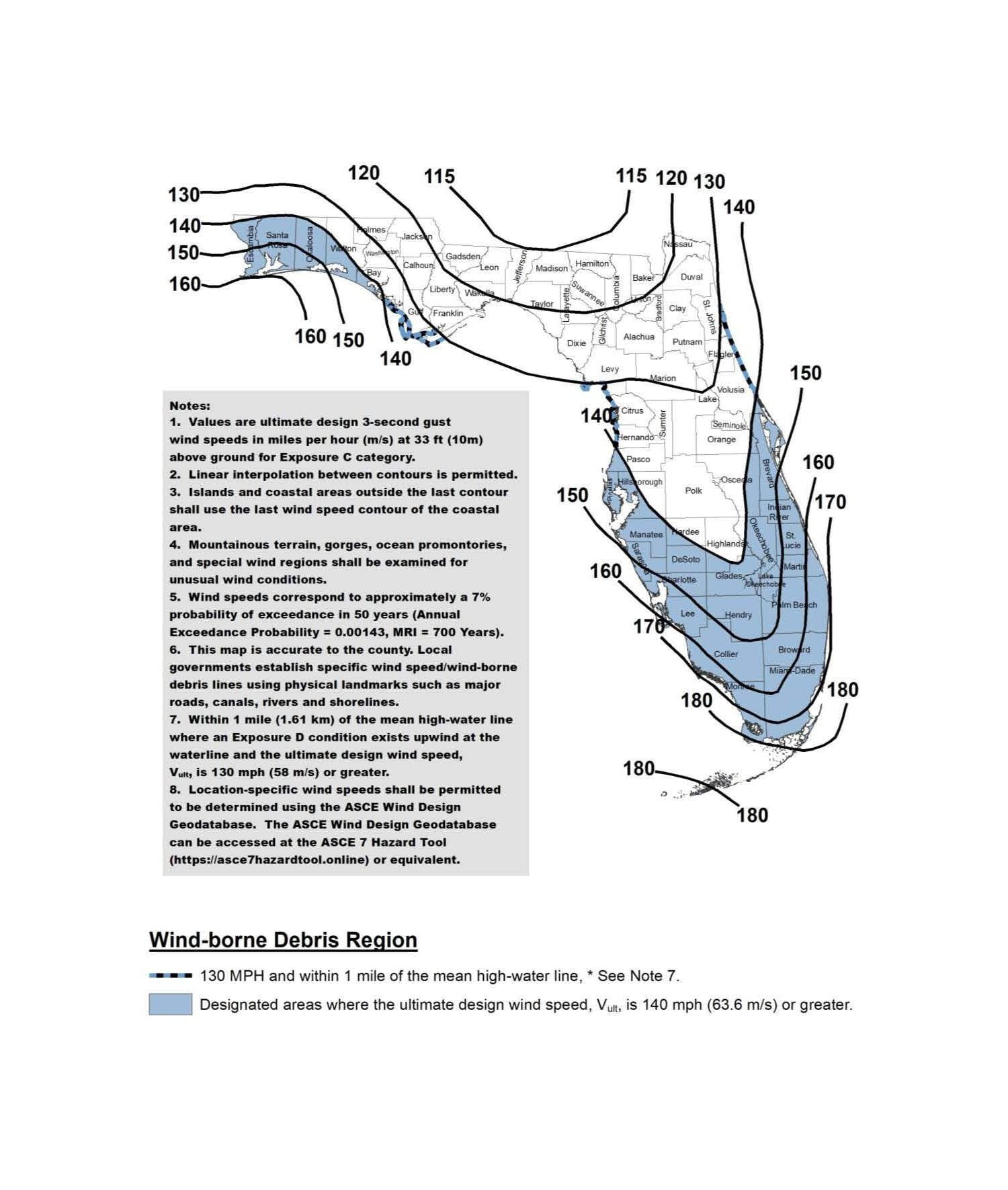
Map Source: Draft Final Report: Update and Development of Wind Speed Line Maps for FBC 8th Edition June 8, 2023 by The Florida Building Commission & University of Florida Geo Plan Center
Protecting the Envelope: The Power of a Complete System
Here are your options for the four qualifying GAF accessories:
GAF Starter strips to help secure and protect roof edges against uplift
GAF Roof deck protection to seal the overall roof deck against leaks
GAF Ridge Cap Shingles to protect high-stress hip and ridge areas
GAF Leak Barrier to seal roof edges against leaks OR Master Flow® and Cobra® Attic Ventilation with built-in wind and rain resistance
Unlike typical asphalt shingles with layers that are glued together, Timberline shingles with GAF's innovative LayerLock™ Technology are mechanically fused together during the production process. This provides a strong protective bond, not only within each shingle, but for the entire roofing installation. In addition to a Lifetime Limited Warranty against manufacturing defects, Timberline shingles with LayerLock Technology have a Class 3 or 4 Impact Resistance Rating.
This combination of features provides code-compliant protection for your new roof under adverse storm conditions, and can unlock insurance premium discounts as well.
In addition to shingles and the required accessories, GAF also offers roof deck underlayment, seam tape, and a variety of other accessories that contribute to overall storm-resistance for your roof.
The Florida Building Code and FORTIFIED™ Standard
While the Florida Building Code (FBC) has been steadily tightening requirements for building and roof resiliency, a parallel effort known as FORTIFIED™ has been getting attention for its robust standards that often go beyond minimum code requirements.
The FORTIFIED™ program was developed by the Insurance Institute for Business and Home Safety (IBHS) as a voluntary set of advanced resiliency standards to protect buildings against severe weather. FORTIFIED Roof™, in particular, establishes standards for storm-resistant roof construction, including the materials and attachment methods for roofing, deck, underlayment, flashing, and edge metal.
Meanwhile, the FBC has been closing the gap, and its requirements are now almost identical to FORTIFIED Roof™ standards. For example, both the FBC and FORTIFIED™ require a sealed roof deck for all new and retrofit roof construction, to protect against leaks in the event that roof shingles are compromised. (GAF leak barriers, roof deck protection, and approved seam tape meet the requirements of both.)
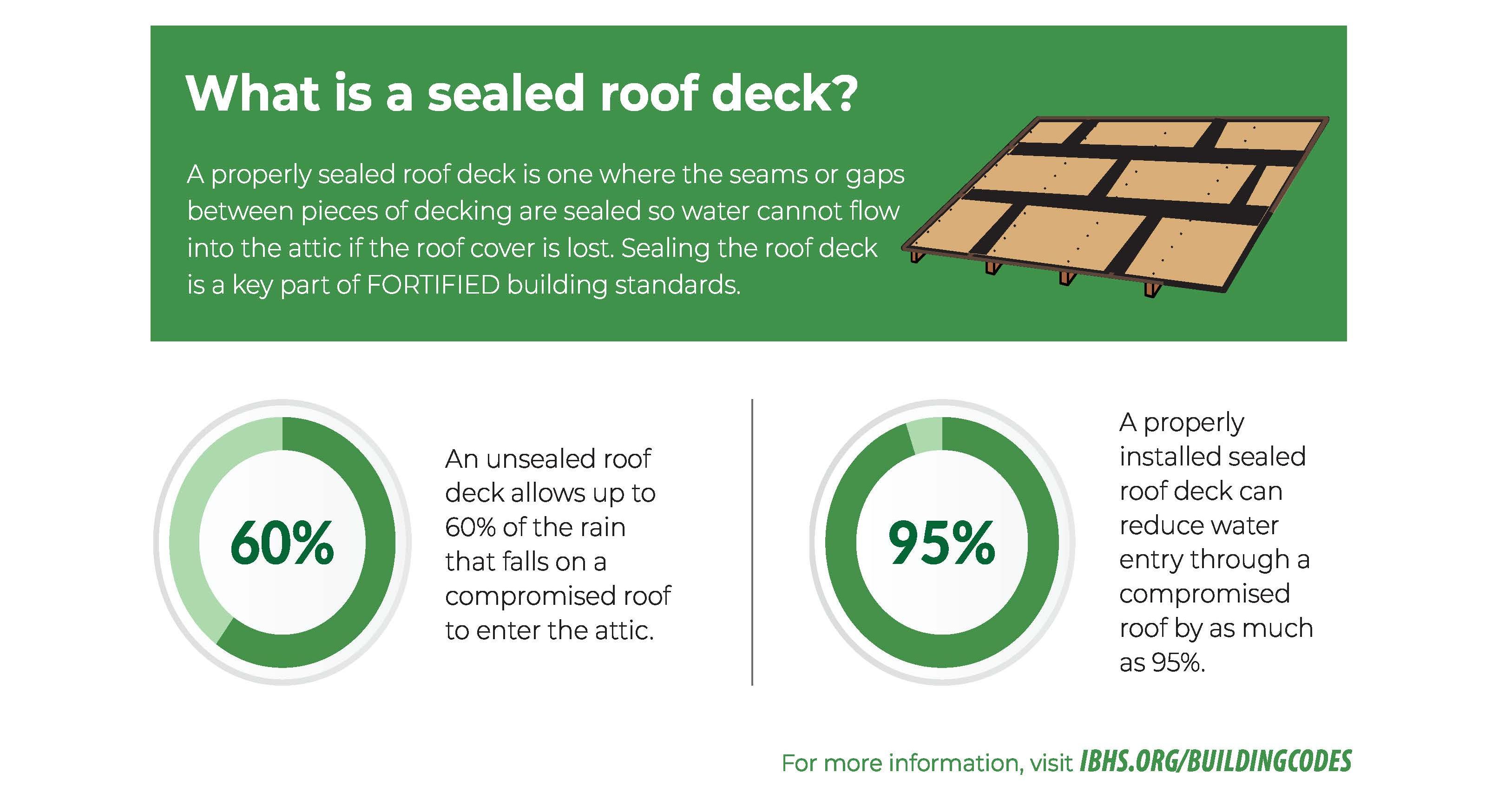
Graphic Source: IBHS.org/buildingcodes
In order for your home to earn and benefit from the FORTIFIED Roof™ designation, you would:
Hire a contractor certified to work with the FORTIFIED™ program
Have the work verified by a third-party evaluator who submits documentation to IBHS for approval
Submit the FORTIFIED Roof™ certificate issued by IBHS to your insurer
Because many Florida roof insurance requirements now align with both the FBC and FORTIFIED™, you may find that it makes sense to pursue a FORTIFIED Roof™ designation for your new roof. By taking the additional steps of third-party evaluation and certification, you can provide documentation to insurers that proves your roof meets the advanced standards for storm resilience in the state of Florida.
FORTIFIED Roof™ certification can not only help you procure the coverage you need, but it can also unlock significant insurance discounts (up to 40%), as well as state grants, roof repair financing opportunities, and a higher home resale value. An added benefit is the peace of mind that comes from investing in long-term protection for your home. You can rest assured that GAF has the roofing products and know-how necessary to ensure your home is eligible for the FORTIFIED Roof™ designation.
Next Steps
Whether you're planning a new home or reroofing your existing one, choosing the right contractor is the important first step in building a hurricane-resilient roof.
Working with a qualified contractor who can make sure that your roof is engineered to withstand severe storms, along with providing proper documentation to your insurer, is the most effective way to procure the best available insurance coverage for the most reasonable cost.
Connecting with a GAF Master Elite® Contractor – who is also FORTIFIED™ Certified – can provide the assurance you need that your contractor has the necessary training and experience to install a qualifying WindProven™ and FORTIFIED™ compliant system for your Florida home, giving you peace of mind for years to come.
*15-year WindProven™ limited wind warranty covers GAF Shingles with LayerLock® Technology only and requires the use of GAF Starter Strips, Roof Deck Protection, Ridge Cap Shingles, and Leak Barrier or Attic Ventilation. See GAF Roofing System Limited Warranty for complete coverage and restrictions. Visit gaf.com/LRS for qualifying GAF products. For installations not eligible for the WindProven™ limited wind warranty, see GAF Shingle & Accessory Limited Warranty for complete coverage and restrictions.
