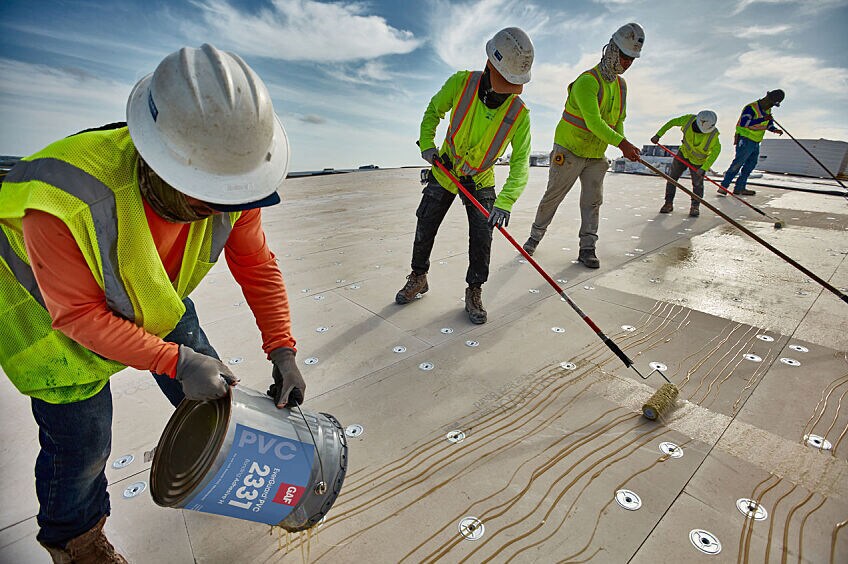
Commercial roofs are a critical part of any building, protecting people, equipment, and property from the elements. But what is the lifespan of a commercial roof? While most commercial roofs generally last 20 to 30 years, lifespan varies widely depending on material type, climate, maintenance, drainage, and installation quality. With proper care and timely maintenance, a roof can often outlast its expected lifespan.
Typical Lifespans for Common Commercial Roofing Materials
Here are the expected lifespans for some common commercial roofing materials:
- TPO – 20-30 years
- PVC – 15-30 years
- Modified bitumen (SBS) – 10-30 years
- Modified bitumen (APP) – 10-20 years
- Built-up roofing (BUR) – 15-20 years
- Liquid membrane systems - 5-30 years
- EPDM – 10-15 years
- Metal – 40-60+ years
Understanding how commercial roofs age can help you better determine the lifespan of your roof, so you'll know when it's time to replace it.
How Commercial Roof Assemblies Age
Commercial roofs are exposed to a range of climatic conditions, including rain, snow, hail, wind, and extreme temperatures. Exposure to these elements can have detrimental effects, but each layer of the roof assembly is affected differently depending on the level of exposure.
Membrane Wear
Roof membranes wear over time, showing subtle changes such as brittleness and minor cracking, progressing to more severe issues such as seam separation, lifting, and punctures.
UV Exposure
Exposure to ultraviolet light breaks down the chemical bonds in roof membranes, making them less flexible, more brittle, and more prone to color loss and cracking. This can lead to seam separation and leaks.
Moisture Absorption
Moisture absorption through leaks or membrane degradation can saturate insulation, reducing its thermal performance, promoting mold or mildew growth, and causing potential degradation of roofing materials.
Thermal Cycling
Thermal cycling between hot and cold temperatures can cause cracking, seam separation, and loose fasteners. This creates entry points for moisture, which further degrades adhesives and shortens the roof's service life.
Insulation Degradation
The effects of degraded insulation on a commercial roof include higher energy costs, increased strain on HVAC equipment, and even structural damage. Wet or compressed insulation loses its R-value, traps moisture, which can cause rot or mold, and can lead to roof damage that compromises the building's thermal envelope.
How Roofing Professionals Evaluate Commercial Roof Condition
Roofing professionals use roof core cuts to inspect beneath the top layer of a commercial roof and reveal hidden conditions. These samples allow them to evaluate the roof assembly, including the number of layers or roof assemblies installed, the materials used, whether there's a vapor barrier, and whether moisture has intruded below the surface. This information helps professionals determine when a roof replacement is necessary and ensures that any new system is designed for the building's specific conditions.
In general, contractors will take three core cuts per 100 squares of roofing, plus one additional core cut for each additional 100 squares. For example, a roof with 190 squares would recommend four core cuts. These cuts are strategically located at high and low points on sloped or tapered roofs, and at each level on multi-level roofs, providing a comprehensive view of the roof's condition.
Each core cut involves making a circular incision in the top roofing layer. A core tool then cuts through the layers below, removing the sample for analysis—similar to using a cookie cutter. Roofers examine the materials from just beneath the top layer down to the roof deck to assess their age, condition, and any water intrusion. The hole is then properly patched to prevent leaks.
Core cuts, along with a visual inspection of the roof's top layer, help roofing professionals assess the roof's age and condition, whether water intrusion is an issue, and whether additional protection is needed. Using this information, the contractor can then recommend whether the roof can be repaired or needs to be replaced.
Another tool roofing contractors use to evaluate a commercial roof is an infrared moisture scan. Using a thermal camera, contractors can detect temperature differences, which reveal hidden moisture because wet materials tend to heat up and cool down more slowly than dry ones. This technology helps identify potential leaks and trace the path of water into the building's interior.
The Difference Between Expected Aging and Red-Flag Indicators
Typical signs of commercial roof aging include:
- Visible damage such as cracks, blisters, or curling
- Membrane issues such as lifting or bubbling
- Deterioration due to chemicals, fats, or oils
- Wear and tear on footpaths
- Rust or corrosion on metal roofing
- Mold or algae growth
- Loose or damaged flashings
- Higher energy bills
- Deteriorated flashings (pitch pockets), sealants and expansion joint materials
- Signs of ponding water conditions (structural/design issue)
- Sagging roof deck (structural/design issue)
Critical signs that you may need to repair or replace your commercial roof include:
- Signs of roof leaks, including discolored ceilings or walls, cracked paint, interior drips, and mold or mildew growth
- Frequent leaks
- Environmental debris build-up on the roof membrane (leaves, branches)
- Compromised structural system, including sagging roof deck or partial or complete roof collapse
Recognizing these signs of damage and age-related deterioration is essential to maintaining your commercial roof's ability to protect your building. That's why regular maintenance and inspections are so important. You should have your commercial roof inspected and maintained twice a year by a local roofing contractor to keep it functioning properly and stay ahead of needed repairs.
