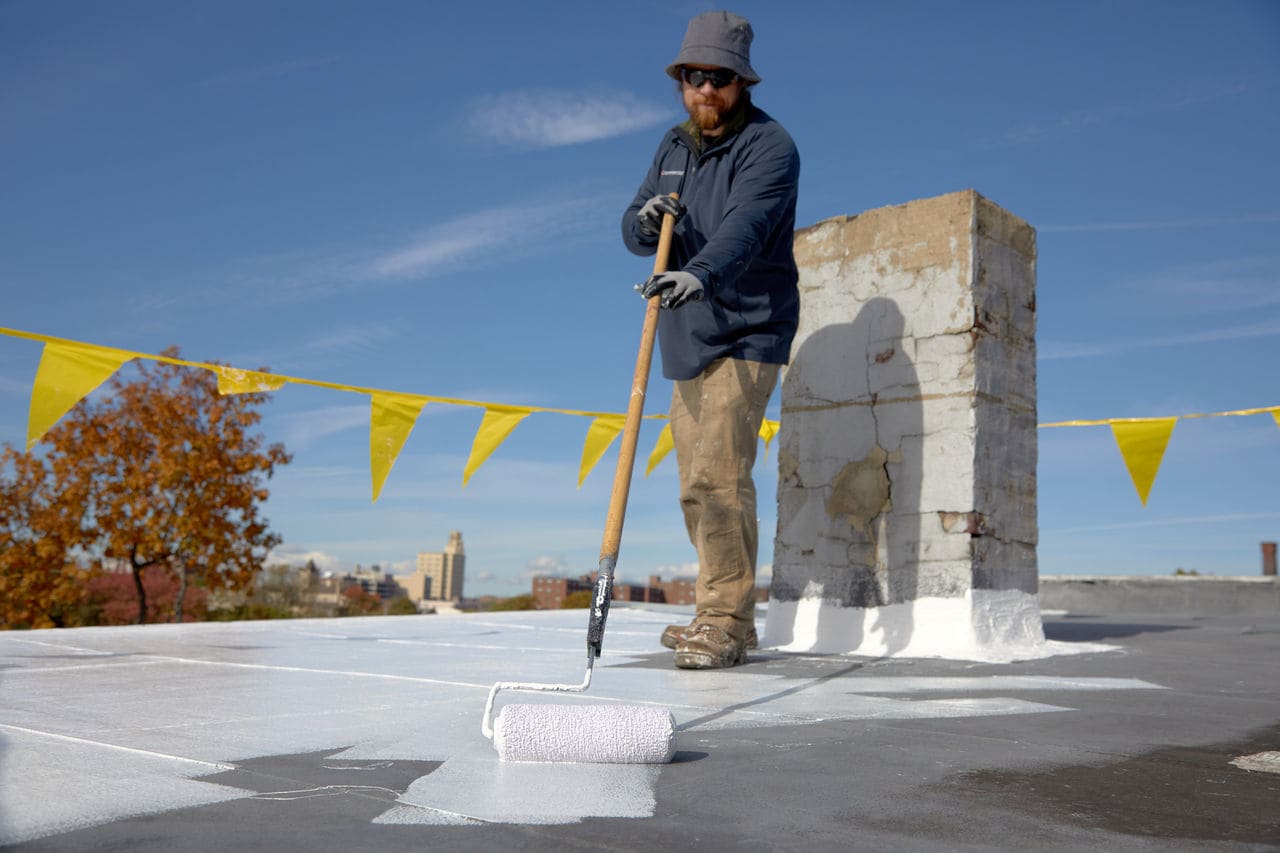
When comparing roof coating vs. commercial replacement, you might wonder: Can I refresh my roof, or do I need a full roof replacement?
Roof coatings—often called liquid-applied roofing systems—are multi-component systems that can form a seamless membrane over an existing low-slope roof. Coatings can help extend the service life of commercial roofs that are still structurally sound without having to go through a full replacement.
But is your roof eligible for such a solution? Here, we'll compare the use cases, benefits, and considerations of each to help you get a better idea of which option is right for you.
What's the Difference: Coating vs. Replacement
Roof Coating
A roof coating is a multi-step restoration over an existing roof. Prep involves addressing repairs needed, removing and replacing moisture-saturated substrate, reinforcing seams, cleaning surfaces to ensure the appropriate coating system will adhere, and applying a coating system over the existing low-slope roof.
Benefits typically include: lower cost, less disruption, and less tear-off waste than a full replacement.
Commercial Roof Replacement
A commercial roof replacement is a larger construction project that involves removing and reinstalling the entire roofing assembly. If your existing system is too far gone, too wet, or too risky to restore, you may need to replace it.
When to Choose a Roof Coating vs. Roof Replacement
Choose a roof coating vs. a commercial replacement when your roof meets the right criteria and it's the right move for your property. Adding a coating over a damaged or structurally compromised roof can cost owners more in the long run, so it's important to get an inspection by a roofing professional who can help guide the decision. This can protect your building, your warranty, and your budget.
If your commercial roof is a good candidate, a coating can extend roof service life without the higher cost or disruption of a full tear-off.
Signs Your Roof Is a Good Candidate for a Coating
1. The Roof Is Structurally Sound
Coatings are meant to protect an existing, structurally sound low-slope roof. They're not intended or able to protect a failing roof.
Before choosing coating, investigate to ensure the roof substrate and assembly aren't irreparably compromised. Verify that any damage or aging discovered can be level set with repairs before applying the coating.
2. Water Drains Properly
Some coatings can be negatively affected by ponding water. Drainage issues generally need to be corrected to ensure coating success.
3. Leaks Can Be Resolved
Coatings may fill pinhole leaks, but a coating isn't intended to be a cure for a leaking roof. Existing leaks should be found, repaired, and allowed to dry before coating.
4. Moisture Is Limited
GAF's liquid-applied roofing guidance calls for a moisture survey to find wet substrate that must be replaced. If the moisture survey reveals moisture present in 25% or more of the roof area, a complete tear-off may be considered. This may also be required for certain warranties and protections.
5. You Want Minimal Disruption and Tear-Off Waste
Coating systems are applied over an existing roof, so you can avoid the additional labor and disposal tied to a complete rebuild. This can be a win for budget, operations, and waste reduction.
When Commercial Roof Replacement Is Better Than a Coating
These are some red flags that may mean a replacement is a wiser investment than a coating:
- Widespread moisture: Wet insulation or moisture-saturated substrate throughout the system.
- Structural issues: Significant deck deterioration, major substrate failure, and other compromises to the structural integrity.
- Persistent, stubborn leaks: When repairs cannot resolve persistent leaks—especially across multiple areas.
- End-of-service life: A coating can't add life back to a roof that's already beyond its service life, per the GAF Liquid-Applied Roofing Manual. So, coating a roof that's at the end of its life cycle may be money down the metaphorical gutters.
- Ponding problems: Pooling water that can't be resolved is a red flag when it comes to coating.
- Plus: Any adhesion, moisture, or detailing problems that can't be resolved to bring the roof condition back up to baseline.
Roof Coating vs. Commercial Replacement Cost: How to Compare
Coatings can cost less than replacement, but the numbers only mean something when comparing the same variables within the same project scope.
Drivers for roof coating cost include:
- Roof size
- Amount of substrate preparation and repairs required
- Coating system selected
- Number of coats and application rate used
- Labor costs to prep and install
Drivers for replacement cost include:
- Tear-off and disposal
- New materials potentially including insulation, cover boards, membrane, flashing accessories, and more
- Labor installation costs
- Operational downtime or logistics constraints
Be sure to ask your GAF Coatings Technical Sales Representative and appropriate financial advisors to learn if potential tax benefits or differences might apply.
Coating Selection—If Your Roof Qualifies
After your roof qualifies, you'll work with your contractor or specifier to select coating type. Product choice is determined by your existing roof type, geographic location, climate, and other factors, like local code. An adhesion test will verify compatibility.
Common options include acrylic, silicone, and polyurethane coatings, each suited to specific roof situations.
FAQs
Can you coat an old commercial roof?
Yes, if it's structurally sound and meets criteria, a commercial roof can often be coated instead of replaced. A proper application generally entails repairing imperfections, replacing moisture-saturated substrate, seam reinforcement, proper cleaning for the surface, and an adhesion test to confirm compatibility.
Can you coat a roof that's leaking?
Yes and no—but the yes is more a technicality than a good idea in the face of widespread leaks. Coatings may help seal tiny pinholes, but they aren't able or intended to resolve or find leaks.
The GAF Liquid-Applied Roofing Manual indicates that existing roof leaks will need to be identified and repaired prior to coating and that repairs must be allowed to fully dry prior to coating.
Can you put a roof coating on asphalt shingles?
For asphalt shingles, GAF and the Asphalt Roofing Manufacturers Association strongly advise against applying field-applied coatings over installed shingles. Coating over asphalt shingles can degrade the shingle and cause problems with ventilation and airflow, leading to moisture buildup in the roof.
Will a roof coating impact warranties?
Check details of your warranty before applying a roof coating. Warranties vary by manufacturer, roofing system, substrate condition, installation requirements, and other variables.
Ask your contractor about warranty options moving forward. Many liquid-applied roofing systems installed by GAF Certified™ commercial roofing contractors may be eligible for enhanced GAF roof warranties and guarantees.
What's the Right Choice?
If your commercial roof is dry (enough), damage-free (after repairs), and structurally sound, a coating may be the smartest choice. There are major perks when your roof is a good candidate, because a coating can extend roof service life while minimizing tear-off, disruption, and waste.
Alternatively, if moisture has saturated the system, the substrate is compromised, or the system is beyond its service life, a roof replacement is often the smarter play.
Ready to start your coating or replacement? Contact a GAF Coatings Technical Sales Representative for support and next steps.
